Initially, mobile racking systems seem complicated, but their adaptable design and unique characteristics make it easy to install and operate.
• The system comprises moving blocks of racking units, giving you extra space to store essentials. • This system has a movable base to access multiple shelves by simply entering a single working aisle. • These motorized bases are electronically powered are guided by rails on the floor. • For fast aisle access, you can use the push-button control or ergonomic handles to move up to six aisles simultaneously. • The inbuilt safety system stops the movement of this system if it senses any person or obstacle in its path. • When not in use, you need to press the rows together until they are closed while keeping some aisles open. It helps keep stored content hidden without sacrificing accessibility.
What Advantages Mobile Shelving Units Offer?
Although mobile racking systems have been around for several years, there are many distribution centers or warehouses unaware of how significantly it can have a positive impact on their operations and costs. Especially in cramped spaces, they offer more benefits compared to a static racking system. The advantages of movable storage containers extend far beyond space-saving. The following are some important ones.
• By utilizing the available space, this storage system increases the maximum shelving capacity to its optimum level. It allows you to capitalize on every square inch of your facility. • The storage systems are easily customizable in terms of both, the height between individual shelves and the type of materials they store. • Mobile shelving is equipped with safety devices such as brakes and more which help minimize the risk of damage to stored items or injuries to workers. • The system also helps organize the documentation. Thus, employees can easily store and retrieve items and enhance productivity. • The metal shelving system can store a wide variety of goods. Additionally, they can also store athletic equipment, library books, files and records, electronic devices, and more. The possibilities are endless.
Undoubtedly, a static racking system can be an efficient storage solution for many distribution centers and warehouses. But, the unique characteristics of portable racking systems facilitate the optimal use of space and more. With reduced operating times and increased product security, mobile racking systems have become a popular solution. Would you like to buy a movable storage system for your facility, then make sure you source them from a reliable industry leader like SPS Ideal Solution. The company offers high-quality, performance-driven storage solutions for every product.
Changes in weather, exposure to extreme heat or cold, ozone, and so on affect the structure and air pressure of the tire. So, even when storing on racks in a safe, cool place, there are certain pointers you must consider to retain the tires in their best condition. Here are some essential tire storing tips which may be useful.
At times, it may happen that tires have to be stored for a long time onto the shelves after they are manufactured. Make sure you clean them every day, and not let any dust settle on them.
Always place them in a vertical position on shelves, and not horizontal. This reduces stress and subsequent wear.
If you have to remove a tire and place it below in a horizontal manner, for any reason, do not place it directly on the floor. You can keep it on a wooden plank or so.
Quite obviously, store it away from direct sunlight or scorching heat. Even if they are made of the best quality of rubber, it may be damaged due to UV rays.
Maintain accurate temperature control when storing tires, and ensure to keep humidity and precipitation on the lower side.
As far as possible, try to have one storage bag for each tire. If that is not possible, match the color of the bag with the tire to prevent any kind of reactions and staining when a number of tires are stored in one bag. For instance, black tires are best when stored in black bags. Seal the bag well to reduce evaporation of oil.
Store the tires away from electric furnaces, pumps, and motors as they may release toxic gases on interaction.
Opt for specially designed and customized robust metal racks to store the tires. Metal racks have excellent load bearing capacity and they do not crack easily.
Design the sizes of each rack based on the type and size of the tire. This is because heavy duty tires used for trucks, bulldozers, and so on would require robust steel racks with extra weight bearing capacity and equally good tools to load or unload them.
Aircraft tires have even more specific requirements, although they may not be stored in bulk. However, organized racking always helps increase efficiency and reduce damage.
Steel racks may be with or without bolts and can be customized to suit your specifications. Talk the manufacturer for an accurate design.
Are you a tire manufacturer or supplier looking for proper storage solutions? Hope these warehouse tire storage tips help you. But if you are looking for racks and pallets, ensure you source them from a reliable manufacturer and supplier who can understand the weight bearing capacity and maintenance challenges related to tire storage.
Organizing materials according to their type and priority and optimal utilization of the available space is crucial to enhance efficiency and save downtime and damages. Specially, when there is limited space, proper organization is utmost important. Thus, even the strong and durable racks need guarding equipment, cautious handling, and maintenance to prolong their service life. This post highlights some important tips and tricks that help you avoid pallet racking mistakes and save time, money, and efforts.
5 Common Pallet Racking Mistakes to Avoid
Here is a
list of common warehousing mistakes to avoid when purchasing and using a pallet
racking system. So, let’s take a look at it.
Overloading and Improper Use: When buying a pallet racking system, it is essential to consider their specific weight limits and loading capabilities. Knowing the pallet rack capabilities before loading them with materials or parts helps ensure the safety of your racks and staff. This is because, if the storage racks are not designed to hold heavy and bulky products or those of a certain shape, eventually, the racking system may develop cracks, dents, or even collapse. The weight limits of each shelf should be displayed on it. Also, consider the number of items you can store in each shelf because overloading should not happen in terms of volume as well. One of the best pallet racks practices for safety regulation is to store the heavy loads at the bottom or on the floor.
Climbing Pallet Racks: Many warehouses and distribution centers have pallet racks that stores items out of reach. To save time, workers climb on the shelves to assemble or pick orders. But, storage racks aren’t designed for climbing as it can not only lead to racking collapse with loss of items and thousands of dollars of damage. Additionally, collapsed racks can cause serious injuries to nearby workers. Proper training of warehouse staff is essential in terms of its usage, convenience, and safety. As a tip, only those materials or parts which are not required often can be stored on the upper shelves or in faraway areas of the warehouse. Also, you can use proper material handling equipment to safely load or unload them.
Overlooking Repairs and Damages: Most of the time, pallet racks are subjected to abuse in the warehouse including, overloading, improper loading, collision with heavy forklifts, and beyond. For preventing and reducing the risk of pallet rack damage, train your forklift drivers on proper loading procedures and maintaining forklift speeds within warehouses. Also, train them on keeping the warehouse free of clutter, and ensure there’s enough space for people and materials to move around safely in the aisles. Conduct and be sure to check the beam clips. regularly. Sometimes the storage rack damage may seem inconsequential. However, there may be unnoticed resultant structural damage which may be noticed during such inspections. Once the damage has been identified, repairs should not be delayed.
Ignoring Height to Depth Ratio: It is vital to take the height-to-depth ratio into account. Every pallet racking system should have a lower height to depth or 6:1 ratio. If this ratio is exceeded, then safety measures are necessary to prevent overturning including, baseplates or overhead ties. When you are unsure about the height-to-depth ratio, do inspect your system independently to verify its safety.
Employing Used Pallet Racks: Many warehouses and distribution centers prefer used racking systems as they are more affordable than a new one. That being said, it is one biggest warehouse mistake. Used pallet racks may look good on the floor, but there could be underlying issues like internal rust, corrosion, and more. Over the years, these issues can incur high repair costs. If you decide to go with used pallet racks, then make sure to inspect them thoroughly before purchase.
Hope this post answers your questions on how to avoid pallet racking mistakes. If you are looking for a reliable supplier who will offer you the best storage solution for your facility, then SPS Ideal Solutions could be the right choice. With a vast industry experience, the company offers high-quality storage racks and material handling equipment for every product.
4 Must Know Tips for Maximizing Space on Pallet Racks
Pallet racking is a perfect choice for you warehouse space optimization. It’s good to have idea on how to save space on pallet racks as it will increase the efficiency as well safety quotient of the warehouse. Have a look at the following warehouse racking tips that would help you optimize the space effectively.
Minimize Aisle Spacing: Aisle widths are an important element in determining how much space can be utilized in warehouses. Minimizing the width of aisles between your pallet racking can immediately increase storage and add the much needed square footage. By reducing the aisle width to the minimum required size, you can increase the amount of warehouse shelving while maintaining steady traffic flow.
Opt for Mobile Racking System: The mobile pallet racking system is compactly designed and significantly increase warehouse capacity. It features vehicle pallets that slid to a safe space once stacking. The system not only saves aisle spacing but helps free up space on pallet racks for items that are frequently accessed. Thus, it can double the storage space while increasing productivity too.
Reassess Rack Usage: Most of the time, warehouses use racks for performing a standard daily task such as shipping/receiving the items. However, you can try using some of the less-populated racks for to store specific commonly needed items based on size, weight, density, carton flow, and so on. Also, if you have racks with extra room to spare, then you can convert them to store the extra inventory and can use smaller racks for daily warehouse operations. This way, you could utilize most of your available space.
Invest in Safety Panels Guards: Investing in pallet rack safety panels is a good idea to protect not only workers but inventory from accidents or damage. They can also help better measure the current products on racks by offering a hard backstop against which a product can fit, and also act as a guide to how much space you still have to utilize.
Now that all the pallet racking tactics and tips are detailed here, you can implement them optimally. Also, you must source these warehouse racks from trustworthy manufacturers and suppliers. SPS Ideal Solutions is a recognized warehouse rack manufacturer as well as supplier. With vast years of experience, the company specializes in designing and manufacturing innovative and performance-driven pallet racks and other durable storage solutions. Made of high-quality and durable materials like stainless steel, their industrial rack solutions can boost your warehouse productivity.
The pallet rack inspection must be performed not just to secure the material and employees but to follow guidelines stated by the Occupational Safety and Health Administration (OSHA), too. OSHA guidelines for warehouse safety include ventilation, aisle space, clear floors, and slippery tiles, and sanitization of the warehouses. Therefore, industrial warehouses must be inspected to ensure appropriate working conditions for the occupational safety of operators.
How to Perform a Pallet Rack Inspection?
The pallet rack inspection is performed in the following two steps:
Inspecting Rack’s Structure and Condition: This inspection is conducted as per the Specialty Equipment Market Association (SEMA) guidelines. In this inspection, the SEMA approved rack inspector (SARI) inspects the rack for crushed or sheared frames, bended columns, and beams, broken anchors or footplates, etc. This warehouse rack inspection assures sustainability.
Inspection for Prevention and Protection: The preventive and protective warehouse rack inspection involves checking for lift truck collision, shelf overload, and sanitization. The aisle space is inspected to avoid lift truck accidents, the shelves are checked to see if they are stacked evenly and if the load distribution is appropriate. Lastly, the racks are checked for their cleanliness and sanitization to ensure they are free of dust, oil, rusting, etc.
Importance of Pallet Rack Maintenance
Pallet rack maintenance helps improve their life expectancy. Often the pallet racks are exposed to uneven and extra load, therefore are susceptible to sudden damage. In order to prevent the damage or to recover the damage, RMI guidelines for assessment and repair of a damaged rack is to be followed. According to RMI guidelines, the warehouse rack repair must be performed under an expert’s guidance to avoid accidents.
Let us discuss how to perform pallet rack maintenance in compliance with RMI guidelines.
How to Perform Pallet Rack Maintenance?
Ideally, the first step of pallet rack maintenance is inspection itself. Therefore once the inspection is done, a repair can be done to maintain the warehouse rack system. The following steps are to be followed for maintenance.
In case of overloading is detected, then the restocking of goods must be performed. The pallet stacking must be distributed evenly, where the load on the joints shall be less. Vertical pallet stacking can be a suitable manner as compared to horizontal. It helps in reducing bending stress on the beams.
Broken base plates, bolts are to be replaced for sustainability.
Aisle space must be cleared and forklift speed limitations must be set, as this helps reduce forklift accidents.
Regular cleaning, rust-proofing, disinfection must be performed to maintain hygiene in the system.
Now that the importance of inspection and maintenance is discussed with the proper way to perform it, you must consider getting it done from professionals. Along with this inspection and maintenance, you must also focus on the quality of racks. It is important that you source trusted suppliers or manufacturers like SPS Ideal Solutions. The company offers custom warehouse racks and industrial pallets in various configurations to meet your application requirements.
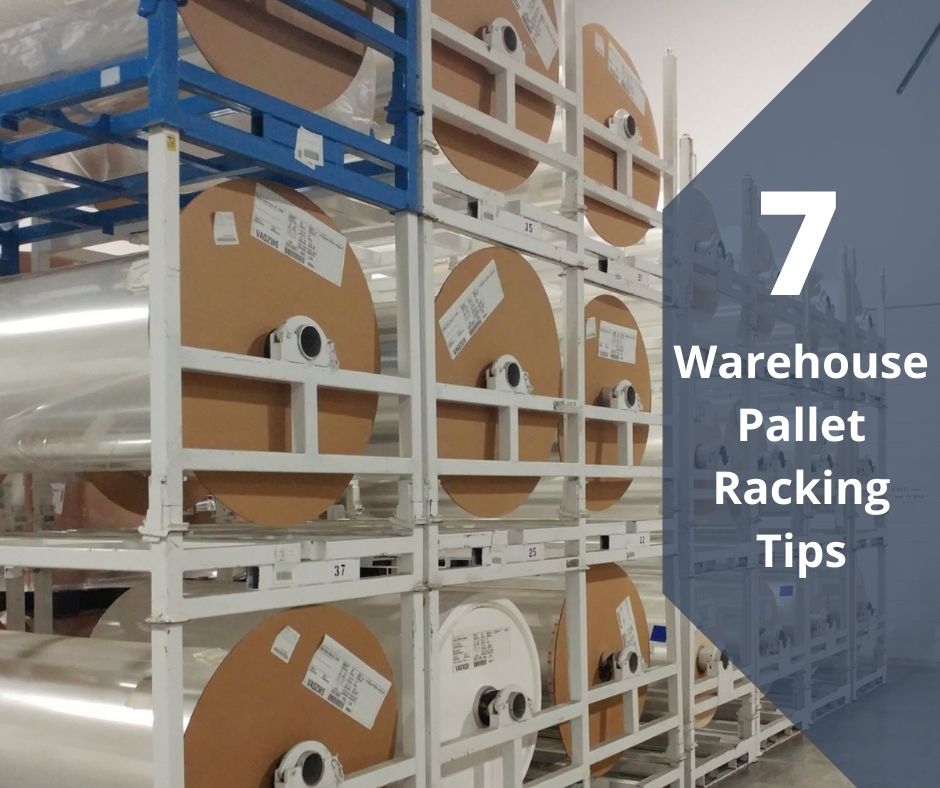
Easy-to-Follow and Proven Warehouse Racking Tips and Tactics
Warehouse space optimization is a complex process. It requires strategies to enhance efficiency. Especially, for where product incoming and outgoing are frequent. In such cases, poorly stacked warehouses can cause accidents. The following warehouse racking tactics and tips would help you optimize the space efficiently.
Analyze Product Circulation Rate: To organize your warehouse for higher productivity, you must know the product circulation rate. It involves keeping records of the number of products stacked on racks, duration of each products’ stay, and time of withdrawal. Once this is done, you get a pattern of which product stays for long and which one is withdrawn early. This way by considering product circulation rate, you can stack demanded product to easy access rack and vice versa.
Implement Suitable Pallet Stacking Mechanism: According to the product circulation rate, you must choose the pallet staking mechanism. It is generally known as the Warehouse Management System (WMS). You can go for First-In-First-Out (FIFO) or Last-In-First-Out (LIFO) techniques. If your product life cycle is less or demand is high, then LIFO should be adopted. If the storage of products is long term the FIFO can be adopted.
Increase Vertical Racking Space: Stacking in vertical storage can help make optimum use of warehouse square footage. This saves room space and the installation of spare units is not required in this case. The vertical storage also ensures clear visibility of products. Along with this, forklifts can travel at great speed vertically since there is no obstacle, it also increases productivity. In modern warehouse storage solutions, multi-level rack structures are popular. These warehouse designs are 20-30 feet tall. They offer varying infrastructure for a different size and types of products and allow effective automatic storage support.
Increase Aisle Spacing: Increasing aisle spacing increases visibility. Distance between two aisles is generally the traveling distance for forklift. Due to decluttered and spacious traveling route, the operator can move the forklift easily through the passage. Effective operation increases productivity.
Adopt Deep Lane Shuttle/Pallet Racking Techniques: Deep lane storage stacking is a technique that involves stacking the products in the pallet and then pushing them at the bottom by using gravity or truck lifts. This technique is often implemented in a shuttle pallet rack mechanism to enhance storage space.
Opt for Mobile Pallet Racking Systems: Mobile pallet racking systems feature vehicle pallets that slid to a safe space after stacking. These systems help saving aisle spacing. Therefore, it can literally double your storage space and productivity too.
Time-Specific Storage Operation: To make the operation more productive, the operator can vary the speed of shuttle and pallet travel time accordingly. This means, if the activity is to be performed urgently, then pallet speed is high, otherwise speed is reduced. This ensures that pallet rack stacking operation is done in the available time. According to the total storage time, the activity speed varies which enhances the efficiency of the storage operation. However, the operator can only raise the speed up to a certain limit due to safety concerns.
Bonus Tip:
Invest in Rack Protection: “Money invested in safety is money earned in productivity” is a saying in the industrial world. You must invest in rack protection systems to avoid any accidental damage. Due to the protection, any error-centered loss can be saved and productivity can be increased.
Now that all the pallet racking tricks are detailed, you must consider sourcing these warehouse racks from a trusted manufacturer. SPS Ideal Solutions is a recognized warehouse rack manufacturer and supplier. Made of stainless steel and durable materials, their industrial rack solutions can be a boost to your warehouse productivity.
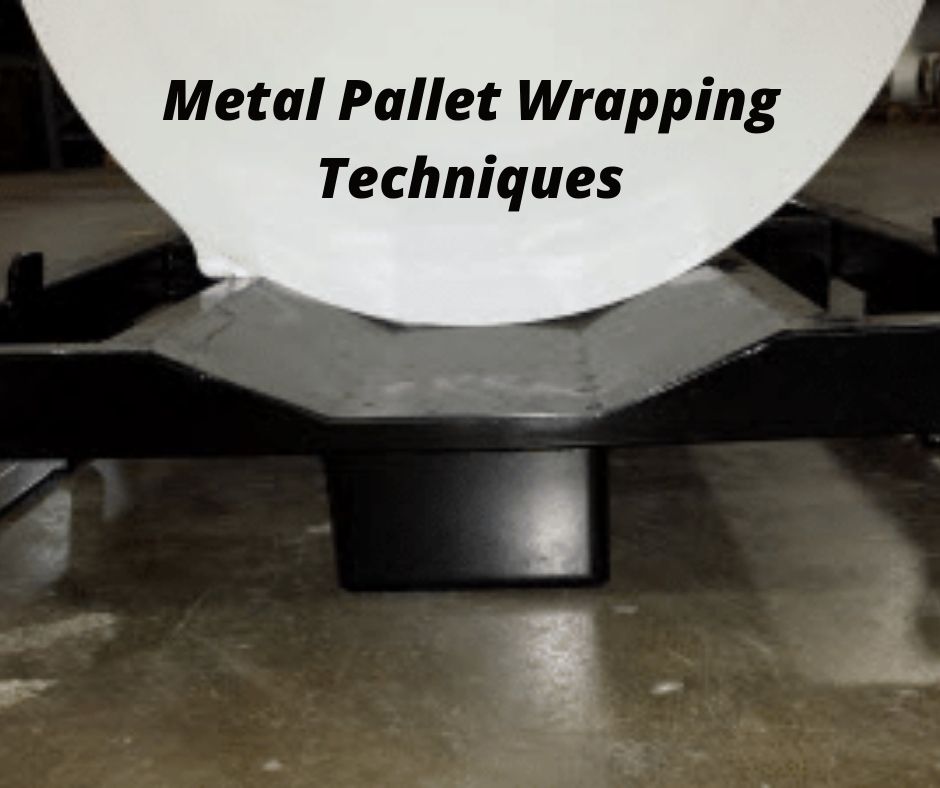
Metal pallets are often used for heavy-duty material shipping. Therefore, it is important to have sustainable packaging on metal pallets. The following are some proven effective metal pallet wrapping techniques.
Selection of the Pallet: The first factor for effective metal pallet wrapping is to select a correct pallet. The metal pallets house heavy material that can be loose parts, raw materials, mechanical equipment, etc. Therefore, a metal pallet must be selected which is just enough for storing the materials comfortably. The quality of a metal pallet also must be checked during the selection. The metal pallets with faulty welding or rusted metal must be avoided.
Appropriate Material Packing: No matters if the goods to be transported are raw material strips or a whole assembled equipment, it must be set well in the pallet. If there is some gap left between components and the pallet walls, then it must be filled with foam paper, foam sheets, etc. Loose parts may collapse against each other if not tightly packed inside a pallet. This causes damage, thus to reduce transportation damage, the material must be packed properly.
Stacking Up: The pallets must be stacked up strategically if it’s bulk shipping. Comparatively heavy pallets should be placed at the bottom and the lighter ones must be placed on the top. This helps manage the load on them effectively. Also, the pallets must be stacked up on a flat panel and overhanging must be avoided. Evenly stacked pallets are easy to wrap and it also becomes sustainable.
Shrink/Stretch/Nylon-Wrapping: The filled pallet weight must be sustained by the wrapping material. Shrink or stretch wrapping is used to wrap metal pallets, under regular shipping conditions. However, for rough shipping, plastic stretching tape may not suffice. In such conditions, nylon wrap is a more rigid and sustainable option.
The pallet metal pallet wrapping process must be done by following some precautions. The precautions are detailed as follows:
While wrapping the metal pallet, there should not be a loose wrap. Loose wraps may trap air which can cause oxidization of metal pallets and components.
The wrapping must be multi-layered to ensure the durability of the packaging.
If any sensitive equipment or material is being transported then the packaging must be shock and vibration resistive. Foam sheets between each layer of wrap, dock absorbing material sheets, etc must be inserted in the wrapping layers.
If the wrapping is done manually, then the wrap must be twisted timely for enhancing strength and durability.
However, there are advanced metal pallet wrapping techniques available that are proven time and effort-efficient.
Advanced Metal Pallet Wrapping Techniques
Following are the advanced metal pallet wrapping techniques used in industries:
VCI Packaging:Metal pallets are often susceptible to corrosion since they are made of steel, brass, copper, etc. The corrosion can be inhibited using Volatile Corrosion Inhibitor (VCI). In this technique, the pallet surface is specifically covered by a very thin layer of VCI material. A very small dose of inhibitor is consistently released to the pallet material from the VCI coating. This type of packaging is an advanced metal pallet wrapping technique that secures metal pallets from corrosion. It also resists metal aging by offering UV protection, resistance to surface damage, chemical resistance, etc. Therefore, this technique is used for industrial metal pallet wrapping.
Automated Metal Pallet Wrapping: Automated metal pallet wrapping is a mechanized wrapping technique. It features a 360-degree metal pallet wrapping machine that offers quick and full coverage wrapping. This wrapping equipment overcomes metal pallet weight restriction and the conveyor system offers appropriate placement of the packed pallet. This machine is suitable for any type of wrapping material and shrink or stretch or nylon wrapping can be performed by this machine. It saves human efforts and increases process efficiency.
As mentioned earlier, for effective metal pallet wrapping, the selection of quality pallet and wrapping material is as important as the technique. You must source the metal pallets and wrapping essentials from trusted suppliers. SPS Ideal Solutions designs and manufactures innovative and performance-driven stainless pallets and other durable storage solutions, as well as metal pallet wrapping services. They have been offering customized storage and packaging services to a large range of clientele. They offer advanced pallet wrapping services like VCI packaging and automated metal pallet wrapping.
The pallet shuttle system is designed to achieve high pallet capacity and high-density storage. The function of this system effective. It either uses First-In-First-Out (FIFO) or Last-In-First-Out (LIFO) techniques of inventory management. First-In-First-Out (FIFO) is often used for general product storage such as raw material, metal workpieces, and unperishable items. However, Last-In-First-Out (LIFO) technique is used for products with low life cycles or validity like dairy products, meat, etc.
Reasons Why Pallet Shuttle System Is Needed For Your Warehouse
When it comes to inventory management, every organization demands a quick, organized, user-friendly, and cost-efficient warehouse. The pallet shuttle system enables warehouse managers to meet their storage and retrieval goals. The following pallet shuttle system benefits have contributed to their popularity among warehouse managers.
Easy Automated Operation: This system uses a WMS software which is used to remotely control the pallet system. In this system, automated shuttles or vehicles are installed in the rack area instead of conventional forklift trucks. Your warehouse operator has the shuttle and pallet control over a tablet. The operator can select the inventory management technique like FIFO or LIFO from the software itself.
Operational Versatility: To operate the system, the operator needs not to enter the warehouse. It takes only one command to start the shuttles. Another benefit of operational versatility in this system is that it is a scalable system. The operator can set the limit of products being transported, and the destination of loaded shuttles to reach. This means the racks can be filled randomly, as per the requirement.
Safety: In this system, the shuttle need not enter the rack. Therefore, unlike conventional forklift, the pallet shuttle system has a negligible risk of accidents. In the case of human safety, this system can be operated from outside the warehouse. Therefore, there is nearly zero chance of hazards. These systems have a user management feature, which allows managers to restrict the number of operators in the area. Thus, no unauthorized person can interfere with inventory management. This rules out the security concerns as well.
Continuous and organized product flow: Unlike traditional forklift based WMS, these systems possess advanced product diversification capabilities. The products can be grouped according to specifications and supply chain details. Therefore, the warehouse product management becomes organized. The product flow is continuous as FIFO or LIFO is regulated on the shuttle pallet system.
Space and time saving: The pallet shuttle system benefits in space and time-saving. The storage capacity of each rack is 131 Ft in depth. This means the products can be stored vertically, which helps in saving room space of assembly. The built-in error rectification sensor helps position the shuttles efficiently and eliminate the empty ones. So that the eliminated shuttles go back to the queue and the storage space increases.
In terms of time, inventory time is reduced by this system. The loading and unloading duration is reduced as lifting time is reduced to 5 seconds or less per product. Generally, the shuttle speed is about 259 Ft per minute in the empty state, whereas a loaded shuttle travels 148 Ft per minute this end-to-end shuttle travel mechanism causes no interruption, therefore there are negligible chances of time loss.
However, the knowledge about pallet system shuttle benefits is not enough for effective application, rather you need to use reliable pallet racks and other warehouse storage systems, too. This becomes possible when you seek services of experts like SPS Ideal Solutions. This company possesses a vast experience in designing and manufacturing customized storage solutions to suit your storage and shipping needs.
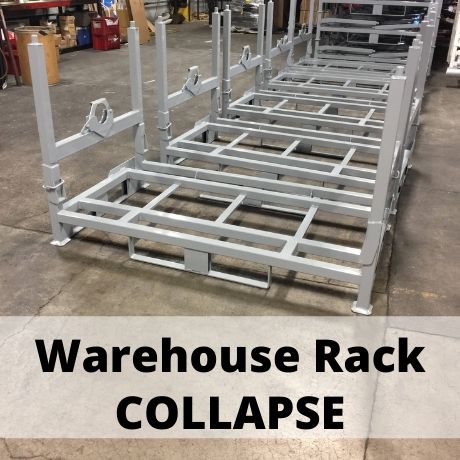
A pallet rack may damage due to several reasons. The below section analyzes them in detail.
Forklift Damage: The forklifts are of great help in the warehouses, as they can literally lift heavyweights, which are not possible for workers to carry. These forklifts are automized, still, they can be one of the causes of warehouse rack accidents. At times, this equipment may not function as expected and sometimes may damage while in action. If a forklift becomes uncontrollable due to some internal damages, then it can crash into pallet racks thereby causing racking collapse in warehouse.
Installation Errors: A warehouse pallet rack installation is a complex process. Even though the racks look like just stacked up pallets and shelves, its installation requires planning. There are many components that are installed in a rack system for stability and safety purposes. A well-designed racking system can collapse if not installed and maintained well. Wrong part attachment, loose-fitting, etc can cause warehouse racking collapses.
Design Deficiencies: Many warehouse racks are custom designed because all standard racks may or may not be suitable for specific requirements. A warehouse pallet rack design takes plenty of static and dynamic force calculations such as operational loading stress, rack sustainability, forklift travel distance and speed calculations, etc. If any of the design factors are overlooked or implemented faultily, then design deficiencies can cause sudden rack collapses.
Uneven Loading: Uneven loading in the warehouse racks can cause accidental damage. Generally, rack edges are welded and fabricated therefore are weak at the joints. Uneven load distribution can cause the stress-induced failure of certain sections of the racks.
Beams and Uprights Overloading: The warehouse racks are exposed to vertical, as well as horizontal loading stresses. Horizontal stress is distributed over beams where the vertical force is distributed over the uprights. Both beams and uprights are designed for specific bending stress, therefore overloading causes bending and breaking of these elements. Fortunately, the failure due to beam and upright overloading is a long foreseen one. Therefore, in the primary symptoms of bending, overloading can be stopped and this damage can be prevented.
These warehouse rack collapses are often sudden yet that doesn’t mean they cannot be prevented. Let us discuss a few preventive measures for warehouse rack and pallet safety.
How to Prevent a Pallet Rack Collapse?
The following are some tried and tested ways to prevent pallet rack failures.
Installation of Rack Protection: A small investment in-rack protection installation can help avoid sudden warehouse rack collapse. The fact that a pallet rack system has multiple moving components and operators being humans cannot be 100% vigilant, make it susceptible to sudden hit and fall accidents. Therefore, to prevent such failures, rack protection installation like end-of-aisle and aisle-column protection must be installed.
Ensure Aisle Clearance and Visibility: Many warehouse accidents are caused due to obstacles and cluttered racks. Therefore, you must consider spacious aisle clearance during the warehouse rack design itself. It clears a path for operation and halts while increasing visibility.
Decrease Speed Limits: High-speed forklift operations cause serious accidents. To prevent this, there must a safe speed limitation.
Conduct Operator Training: Inexperienced operators are prone to panic and make mistakes. Therefore, train your operators before handing over the controls. It surely can reduce human errors in the process.
Implementing Safety Culture in the Warehouse
Warehouse safety is of paramount importance, especially in preventing incidents like warehouse racking collapses. Establishing a safety culture within the warehouse involves fostering a collective mindset that prioritizes the well-being of employees and the integrity of storage systems. To achieve this, several key factors play a crucial role:
Promoting Safety Culture: Management plays a central role in promoting a safety-first culture in the warehouse. They must actively demonstrate their commitment to safety by providing the necessary resources, training and support to ensure that safety protocols are effectively implemented. By setting clear safety objectives and leading by example, management sets the tone for the entire workforce to embrace safety as a top priority.
Reporting and Transparency on Potential Safety Hazards: Encouraging employees to report potential safety hazards is vital in preventing incidents, including racking collapse in warehouse. Employees should feel comfortable speaking up about any safety concerns they identify in the warehouse, be it related to storage systems, equipment, or operational processes. Creating an environment where reporting safety hazards is actively encouraged, empowers employees to take an active role in ensuring their own safety and that of their colleagues.
Recognizing and Rewarding Safety-Conscious Behavior: Employees who consistently adhere to safety protocols, contribute to identifying safety hazards and actively participate in safety training should be acknowledged and commended. By celebrating safety-conscious behavior, warehouses foster a positive safety culture, motivating employees to continue prioritizing safety in all aspects of their work.
Now, that the causes of pallet collapse and its preventions are well-stated, it is important to consider efficient design and installation along with the rack quality. At SPS Ideal Solutions, we provide customized steel shipping racks, that double as warehouse pallet rack systems for almost all industrial requirements. Our technical experts would work with you to understand your requirements before building the racks. This helps ensure the safety and productivity of racks.
Why Should You Clean and Sanitize Warehouse Racks?
Clean warehouse racks certainly have better benefits than just good appearance. The following pointers will help you understand it better.
Professionalism and productivity: Optimizing the benefits of available resources is the aim of any business. That can be served by a clean, organized, and updated industrial pallet rack. A clean rack offers plenty of space to organize goods. Therefore, the overall productivity of warehouse management can be increased by basic cleaning and sanitizing.
Enhances Lifespan of the Racks and Products Stored on Them: Unclean warehouse pallet racks may bring mean an early onset of disintegration. This mainly happens with metallic racks. Added to this, if the items stored include dairy food products or sensitive electronic equipment, then the quality and lifespan of such products may be affected by bacteria and moisture. Therefore, thorough cleaning of racks and pallets is important.
Ensures Operator Safety: If the warehouse is not well cleaned then the clutter may cause accidents. Jammed pallets or forklifts, clogged hinges in the warehouse rack, and pallet system can damage the system, which may be hazardous. Regular cleaning of racks helps reduce the instances of injuries and workplace accidents caused due to clutter in work areas.
How to Clean And Sanitize Industrial Pallets Racks?
As said before, cleaning and sanitization of racks must be done carefully. It is important to devise a strategy that assures maximum results, with fewer distractions. The following pointers will help you get it right.
Design a Smart Schedule: Cleaning an industrial warehouse is a huge task. Big things take planning. Schedule your cleaning in a manner that you can get it done quickly. Select the days when you have the least goods on the rack. The days with no inventory action can be a smart choice to clean and sanitize warehouse racks. In the case of large warehouses, it is always recommended to do the cleaning in schedule. Perhaps, you can start with the area with less traffic while moving on to the area of high goods traffic. You can encourage staff to clean their assigned areas every day or alternate day.
Consider an industrial vacuum cleaner: Sweep and clean the racks first using brush and cloth. However, this may not be effective if you are considering tiny dust particles or crevices. Using an industrial vacuum cleaner can produce better results than a manual dusting. Vacuuming racks regularly also helps you get rid of dust deposits in crevices or hard-to-reach places. Ensure that employees undertaking cleaning are equipped with PPE. The operator must use gloves, masks, etc to avoid personal infection.
Install Big Dumpsters in Advance: Warehouse cleaning cannot be done without dumpsters. Cleaning a warehouse is clearly not a pick and place task. All unwanted stuff must go to dumpsters and shall never return to the stock.
Prioritize Goods Through Rearrangement and Reorganization: Many times, warehouse managers fail to procure the right well when needed. This is due to poor goods management. Sorting and prioritizing the goods may not be possible on a regular working day. So, cleaning gives an opportunity to sort important and less important products. After all, your ultimate purpose behind this big cleaning must be making space.
Schedule a Regular Warehouse Checkup: You would agree that warehouses are one of the high traffic areas. It is also one of the high-risk areas due to vehicles, people, and stored goods. If you ignore cleaning for the fear of hampering the workday, there are all chances of decay and allergies brought by dust, bacteria, and other allergens. Therefore, scheduling a regular warehouse checkup is important. This will help you ensure a clean workplace for staff and goods.
However, in order to be effective with cleaning, you must use a sophisticated warehouse pallet system. Good quality and organized warehouse rack and pallet systems help to declutter a warehouse and optimize its productivity. Therefore, you must source the warehouse rack and pallet systems from prominent suppliers like SPS Ideal Solutions. We offers various types of industrial racks and pallet systems in custom configurations.
Understanding Pallet Rack Load Capacity for Safe Operation
Pallet rack load capacity is crucial for ensuring the safety and efficiency of warehouse operations. Understanding and managing the load capacity properly helps prevent accidents, equipment damage, and disruptions to workflow. Here are the key points to consider when evaluating pallet rack load capacity for safe operation:
Definition of Load Capacity:
Refers to the maximum weight a pallet rack can safely support without compromising its structural integrity.
Exceeding the load capacity can lead to rack failure, causing product loss, operational delays, and potential injury.
Manufacturer Guidelines:
Always follow the load capacity limits specified by the manufacturer.
These limits take into account both the horizontal beams and vertical frames of the pallet racking system.
Impact of Overloading:
Overloading racks or unevenly distributing loads can cause stress on specific areas of the structure, leading to potential collapse.
Consistently monitor the weight distribution to ensure safe storage.
Beam and Frame Design: Load capacity depends on the materials, thickness, and dimensions of the beams and frames.
Load Distribution: Ensuring even distribution of weight across the racking levels prevents excessive pressure on individual components.
Warehouse Flooring: The foundation beneath the racks must be capable of supporting the combined weight of the loaded racking system.
Know About Two Significant Calculations for Pallet Rack Load Capacity
To ensure a safe, efficient rack operation, it is imperative to calculate the capacity of your pallet rack frame and pallet rack beam. Calculating the capacity of these components brings you an overall idea of the capacity of your racking solution.
Calculating the Capacity of Pallet Rack Beams: To calculate the capacity of beams, you must first determine the type of pallet or load you prefer to store on them. You must have an idea about how much weight will be stored in each beam. For example, if you are planning to store three pallets with loads 1000 lbs each, then the beam capacity must be minimum 3000 lbs or much more.
Calculating the Capacity of Pallet Rack Frame: Measuring the vertical beam spacing would be the first step in determining the capacity of the pallet frame. Calculating the beam spacing is simple and you would just need to measure from the top of one beam level to the top the next beam level. For instance, if the calculated vertical beam spacing comes at 80 inches, then the frame capacity should be considered as 80 lbs.
Rather than the ones mentioned above, there are several other factors that determine the pallet rack weight capacity system. The flooring of your warehouse must also be considered as it is the base on which the entire load is placed. The other factors to be considered include:
Type of steel used in the construction of racking components
Strength and thickness of the steel
Quality of the steel
Rack upright height, width, gauge, pattern
Foot plate size
Beam level and load distribution
Load Capacity Verification and Safety Margin
Ensuring the safe operation of pallet racking systems requires rigorous racking capacity verification and the incorporation of safety margins. This process involves several key considerations:
Conducting Load Tests to Verify the Calculated Load Capacity:
Before implementing a pallet racking system, load tests are essential to verify the accuracy of the calculated load capacity. Load tests involve placing the expected loads on the racking and monitoring its response under different conditions. By comparing the actual results with the calculated capacity, warehouses can confirm the reliability and safety of the racking system.
Applying Safety Factors and Considering Future Growth and Load Changes:
To account for uncertainties and unexpected load variations, applying safety factors is crucial. Safety factors add an additional margin to the pallet racking calculator, providing a buffer against potential overloading. Factors such as dynamic loads, seismic considerations and future growth projections should also be taken into account when determining the appropriate safety margin.
The Importance of Regular Inspections and Load Capacity Reevaluations:
Load capacity verification is not a one-time task; it requires periodic inspections and reevaluations. Regular inspections help identify signs of wear, damage, or changes in load requirements. As warehouses evolve with varying storage needs, reevaluating the pallet racking load capacity ensures that it remains aligned with current operational demands and safety standards.
How to Accurately Determine Pallet Racking Weight Capacity
Accurately determining the weight capacity of a pallet racking system is essential to ensure safety, avoid overloading, and maintain operational efficiency in a warehouse. The process involves calculating the capacity of both the horizontal beams and vertical frames, along with other critical factors. Here’s a breakdown of how to determine pallet racking weight capacity:
Determine Beam Weight Capacity
Identify the Load Type and Weight: Start by identifying the type of load to be stored on the beams. Calculate the total weight that each beam level will need to support. For example, if you store three pallets of 1000 lbs each, the beam must have a minimum weight capacity of 3000 lbs.
Consider Load Distribution: Ensure that the load is evenly distributed across the beam length to prevent uneven pressure and potential bending or failure. Uneven load distribution can significantly reduce the beam’s capacity.
Consult Manufacturer’s Specifications: Always refer to the manufacturer’s specifications for the weight capacity of the beam. These specifications are based on factors such as the material, thickness, and design of the beam.
Determine Frame Weight Capacity:
Measure Vertical Beam Spacing: The distance between two consecutive beam levels, known as vertical beam spacing, plays a crucial role in determining the frame’s capacity. The larger the spacing, the more pressure the frame must support.
Consider Frame Height and Design: The height of the frame, its width, and the thickness (gauge) of the steel used affect the overall weight capacity. Taller frames may have lower weight capacity due to greater leverage.
Account for Upright Patterns and Foot Plate Size: Upright frames often have specific patterns designed to enhance their strength. Additionally, foot plate size and the surface area they cover also impact the frame’s ability to safely support loads.
Account for Additional Factors:
Steel Quality: The quality of the steel used in both beams and frames directly impacts weight capacity. Stronger, higher-grade steel increases the overall load capacity.
Environmental Conditions: Environmental factors like seismic activity or constant forklift traffic may require adding a safety margin to the calculated capacity. In areas prone to earthquakes, for example, additional reinforcements and adjustments may be necessary.
Conduct Load Tests:
Verify Calculated Capacity: Conduct real-world load tests to confirm that your calculated weight capacity holds up under actual operating conditions. Testing under typical and maximum load scenarios ensures the system’s reliability and safety.
Apply Safety Margins: Adding a safety factor to your calculated capacity helps account for unexpected changes in load or other variables. This buffer ensures that the racking system remains safe even under fluctuating conditions.
Regular Monitoring and Reevaluation:
Inspect and Recalculate as Needed: Over time, warehouse needs may change, including the types of products being stored and their weight. Regularly inspect and recalculate the weight capacity of your pallet racking system to ensure it continues to meet operational and safety requirements.
Several critical factors influence the overall warehouse racking weight capacity, each of which must be carefully considered during planning and installation:
Type and Quality of Steel: The strength, grade, and thickness of the steel used in constructing the racking components directly affect the load-bearing capacity. High-quality, thicker steel will support heavier loads compared to lower-grade materials.
Upright Frame Design: The height, width, and gauge of the upright frames play a significant role in determining weight capacity. Taller racks may have reduced capacity due to increased leverage, and narrow frames may buckle under excessive load if not properly reinforced.
Foot Plate Size and Floor Conditions: The size of the foot plate and the strength of the warehouse flooring also affect the system’s ability to handle weight. A strong foundation is essential for safely distributing heavy loads.
Load Distribution: Even distribution of weight across the racking system prevents undue stress on certain sections of the rack. Uneven loading can lead to structural failure, so it’s important to distribute loads equally across all beams and levels.
Environmental and Dynamic Forces: External forces such as seismic activity, temperature fluctuations, or the movement of forklifts can impact the weight capacity. Systems in regions prone to earthquakes, for example, require additional safety margins and reinforced racking to account for potential dynamic loads.
If you are confused to use the correct shipping pallet rack selection that best matches your load requirements, then consider speaking and partnering with a leading rack manufacturer like SPS Ideal Solution. Over the years, the company has successfully delivered various racking solutions for critical applications in custom specifications. The company provides the pallet rack capacity system only after carefully considering the load requirements and other details.
Things to Consider When Choosing Pallets for Your Applications
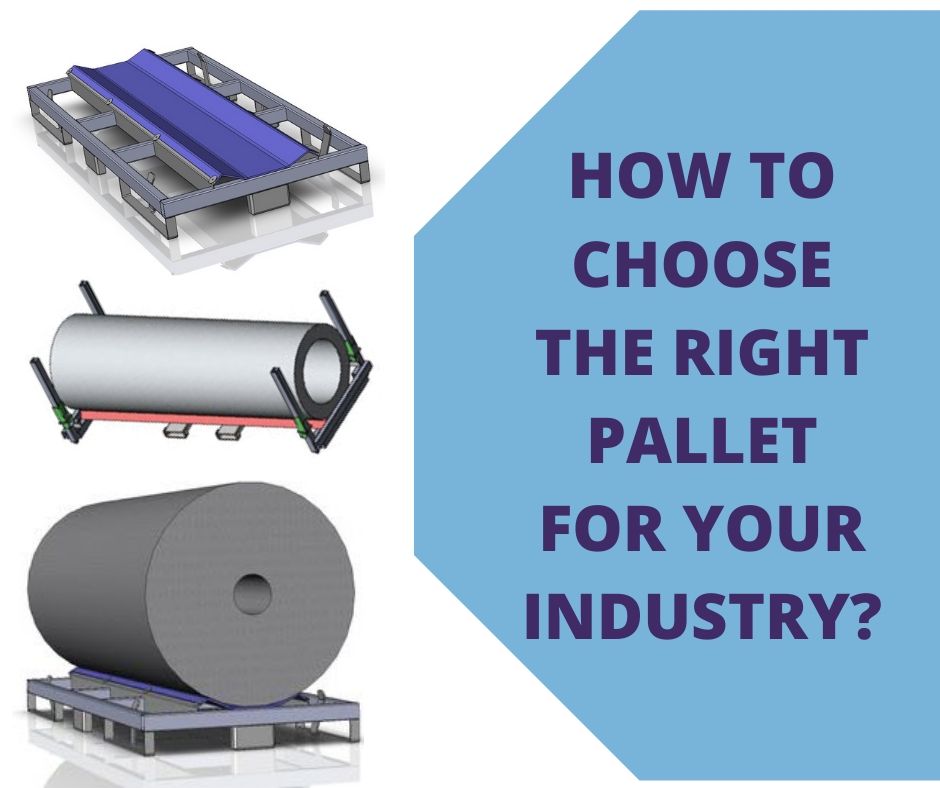
Steel cradle pallets are the best option when it comes to sturdiness, load-bearing capacity, and design flexibility. The other types of pallets include tab stack, flat deck, or metal pallets. Each one has certain characteristics and physical properties. Choosing pallets that are just the right size for your products to be stored safely can be challenging. Here is a pallet buying guide for your reference:
Size and dimensions: Following the ISO standards set for size of the pallets based on application is the most credible option. However, if your product is round or coiled or of an uneven shape, it must fit appropriately on the pallet. The sizes usually vary from 10 to 50 inches in terms of the whole area (length X breadth).
Design based on your product requirements: In most warehouses, product loading or unloading is usually performed using a forklift. So, the design should enable easy and safe use of forklifts. If the product is set to be shipped along with the pallet to your client, it is essential to know and match the configuration of your client’s forklift.
Scope for customization: Choose the right material depending upon the weight and size of your product. You can get customized sizing too. Look for players who understand your application requirements and customize the pallet features accordingly.
Sustainability and load-bearing capacity: The pallet material should be robust and sustainable, and if possible recyclable as well. The material you choose should be resistant to weather changes, chemicals, abrasion, and so on based on your requirement. For instance, if your product is abrasive or has a chemical coating, it should not react with the pallet material. Look for features such as technology used, safety, eco-friendliness, and so on. Consider the packing method you use for your products. All these factors will help you decide on the size and material of the pallet.
Materials used: Steel is the best material for most applications. At times, pallets are also made of wood and plastic, but they have certain limitations. Metals such as aluminum are also used in making pallets and are a good option.
Choosing the right pallet will not only protect your products from damage but also save on costs incurred in fuel consumption, shipping costs, and reusability advantage. Are you an OEM manufacturing rolled or coiled products that require the right-sized racking systems for storage in your warehouse? If yes, please source them from reputed manufacturers and suppliers. SPS Ideal Solutions is one of the well-known providers of storage, shipping, and material handling solutions including various types of steel pallets. Experts at the company have been helping clients to make the best use of their warehouse storage spaces by offering them customized storage solutions.
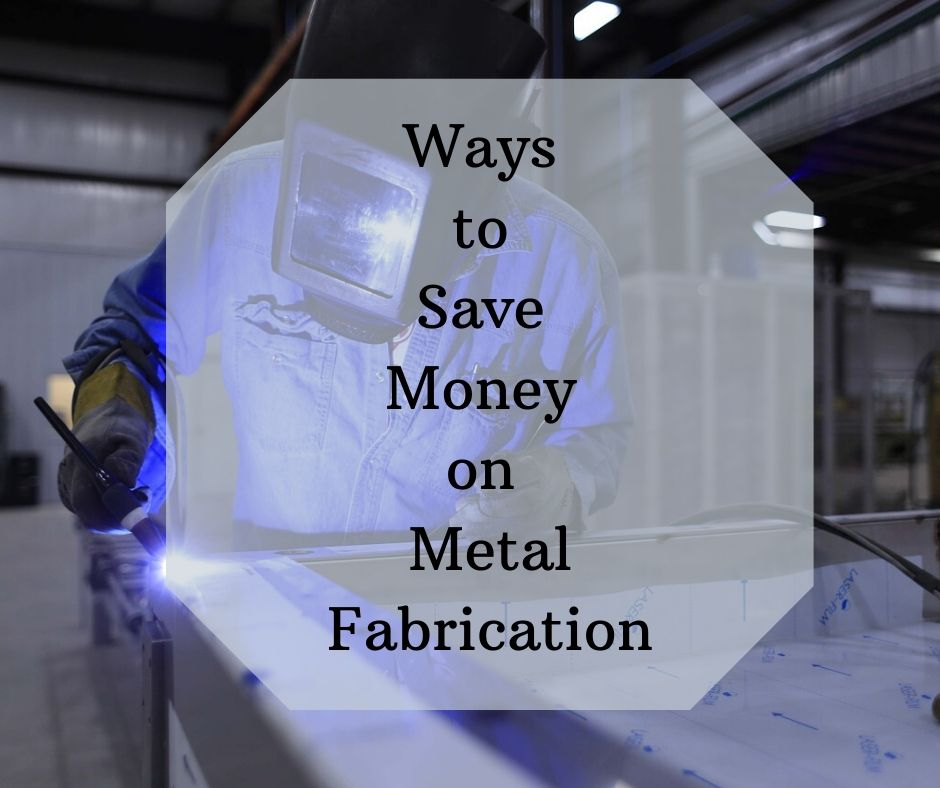
Here are some pointers on how to save money on metal fabrication:
Outsourcing: If you already have, a well-equipped fabrication shop, then this step is not needed. However, if you are a new player, outsourcing metal fabrication is a good idea as you do not have to invest in the equipment and machinery, and other resources required for the same.
Using upgraded and modern fabrication tools: If you own a fab shop, do analyze if you need to upgrade your machines. This small investment would prove beneficial in the long run and also help improve efficiency, volume, and product quality.
Limit Tight Tolerances: Only certain parts and surfaces are crucial when it comes to adding tight tolerance features. These tight tolerances include bend radius, length, diameters of inner and outer circle, and distance covered. While it does enhance your product value and quality, it also increases the cost. So, to cut down on the cost restrict tight tolerances only for the key parts which are integral to the functionality of the product.
Partnering with a reliable player: This is a crucial step because you will have to consider many aspects when partnering with a fab shop, apart from just the budget. These include their experience, work quality, requirement understanding and compatibility, the tools and systems they use, and so on.
Identifying the right materials and quantities: This is crucial because a lot of money is invested in buying materials required and huge quantities may be required. So, determining the right quantity is important because this is a cost driving factor.
Accurate design: You can provide your own drawing or get an accurate design done. This requires discussing the details with everyone concerned, clear communication, and so on. The design should include each component detail, the number of gauges being used, and so on. The cost would come down if you can use one gauge for all the parts. If possible, keep the design simple and reduce the number of folds as they increase both complexity and costs.
Design orientation: There are bound to be bends in the design; but, if they are unidirectional, they will reduce the complexity and cost. This can be done at least for bends in the same area to avoid reorientation. For this, keeping the bend radius consistent is essential.
Partnering with a local player: This is a crucial point as your fab shop partner should be easily accessible and you should be able to communicate with them whenever required. It is beneficial for your partner to live in the same time zone, and this also saves on travel costs. This way you can have in-detail face-to-face meetings and come up with the right plan to suit your requirements.
Choosing the right tools and technique: You may want to reconsider your old technique or automate some of the processes. Your design compatibility with your CNC machine is crucial. This will help save costs in the long run.
Most industrial units have set production processes, and some even have a fabrication shop of their own. However, if you are an OEM and need metal fabrication services or any kind of material handling equipment, ensure you partner with a reliable player.
SPS Ideal Solutions is one of the leading providers of shipping and material handling solutions. The company also provides custom metal fabrication services for metal storage containers to warehouse shelving. The fabrication is performed at its well-equipped manufacturing center. Over the years, it has provided fabrication services to clients in construction, automotive, rubber, textiles, recycling, agriculture, distribution and warehousing, and many other industries. Tolerances for interfacing with robotic handling are readily designed and manufactured.
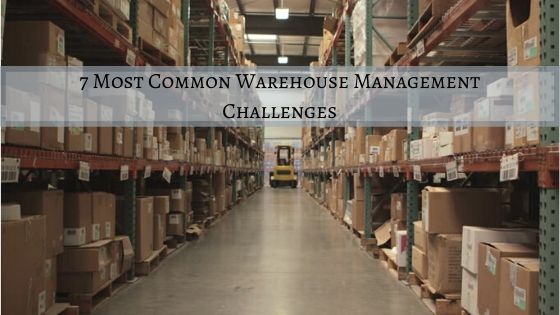
If you are facing structural issues with your warehouse or falling short of space, the issue can be solved through skillful redesigning of the space. Aside from this, here are some common warehouse challenges and solutions that may be useful for everyone working there:
Understaffed warehouse: Less staff in any organization can cause stress due to excess workload and having to look after multiple functions. In a warehouse, one needs to be careful and hasty movements across may result in injuries and accidents. So, it is essential to recruit the required number of people to avoid excess running around.
Delays in shipments due to improper loading & unloading of products out of the warehouse: At times, loading and unloading cargo may take time. But, if this becomes a regular issue, it could negatively affect the business. Make sure the accessories you use for specific types of products and the type of storage units are appropriate. This especially applies if the products or parts are either bulky or delicate. In this case, prior planning in terms of packaging material is also essential.
Issues in planning and supply chain management: Planning and perfect coordination are key to the successful completion of any activity or project. The same applies to the coordination between the warehouse members and the supply chain staff.
Proper use of accessories such as forklifts: If you have a compact space with narrow aisles, accessories such as forklifts are extremely helpful. In case of vertical stacking, which is highly elevated, personnel lifts can be used. Robots or rollers can be used to carry items from one location to another.
Rusted or broken storage units: Get rid of such units as soon as possible as they pose harm to your workers, as well as inventory. There are players who can make collapsible shipping containers and flexible storage racks and pallets for your warehouse. Make sure you use sturdy metals, which are made corrosion and chemical resistant through coatings or other solutions.
Proper planning when adjusting goods in compact spaces: You can opt for corrosion-resistant and robust storage units, which can fit into compact spaces. Also, arrange the inventory such that the goods that need to go out often are stored in the front and are easily accessible.
Upgraded computer systems and live tracking of shipments and arrivals: Nowadays, you can ease your warehouse challenges by using ERPs or similar integrated software to integrate your warehouse and supply chain segments. You can implement robots to do certain jobs especially, in places where it is hard for humans to reach. This will facilitate live tracking of shipments and boost business growth.
If you are a warehouse industry player and have faced such issues, you can approach an expert for a solution. Also, if you are looking for a warehouse upgrade at your facility, there are many known players, such as SPS Ideal Solutions, which can help you with excellent metal pallets and metal storage units that suit your application requirements. Without comprising on the standard safety levels, they can design efficiently so that your material fits into even the most compact spaces. SPS Ideal Solutions is one of the leading providers of shipping and material handling solutions.
Metal Fabrication Industry Market Trends Observed Within 2020
The growth or decline of any industry depends on a number of factors such as demand for that product, the number of players in that industry, relevant government policies, economic factors, and more. Usually, the trends are captured by analysts on a global level, regional and then national. Here we consider the overall global metal fabrication industry outlook in 2020 so far and the patterns observed in the US. Here are some of the global trends observed so far:
Even when we talk about an economic slowdown and tackle issues like inflation, the overall metal fabrication industry outlook is positive.
The market for metal fabrication is estimated to grow at an average growth rate over the next two to three years, and the growth rate seems to have shown over the last six months.
There has been an increasing demand for skilled workers who specialize in metal forming and shaping techniques.
Geopolitics also plays a major role in shaping market growth. This includes differences between China and the US. China is a global leader when it comes to mining and industrial metal fabrication.
Automation is seen to play a role in this market as more organizations look to automate fabrication processes. This helps improve productivity.
Perhaps due to the previous setbacks such as recession and inflation, manufacturers are cautious, but the market is largely stable. This is also one of the reasons for a modest compound annual growth rate (CAGR in %).
Estimated Trends in Year 2020 within Metal Fabrication Industry
Overall, a similar trend in terms of growth rate is likely to continue through the year ahead. However, the outlook seems positive. Here are some of the pointers:
Irrespective of the skills gap, and trade wars, and the increased tariffs on metals by the US government, the metal fabrication market seems poised to grow.
Training and development of workers is also likely to be an important trend. This is primarily because as some of the repetitive tasks done by workers are automated or carried out by robots, the workers need to upgrade themselves to take up jobs that require problem-solving skills.
Overall, the future of the metal fabrication industry looks bright, and this market is likely to thrive over the next two to three years.
Technological Trends in the Metal Fabrication Industry in 2020
Automation has been already playing its role in the metal fabrication industry. Technological innovation has enabled advancements in CNC machines, as well as welding processes. These have helped improve precision and quality, as well as production volumes. Here are some of the technological trends in the metal fabrication industry in 2020:
Robotics: Collaborative robots, also called “cobots”, are slowly picking pace in the metal fabrication industry. They are called so as they work along with humans. More research and documentation are required in this area, especially in terms of the safety of workers and increasing the work potential of these robots. Collaborative robots are defined by the Robotics Industries Association. This is still in a very initial stage of growth as far as metal fabrication is concerned.
Cybersecurity: Securing your systems is crucial in the metal fabrication industry. CNC machines can be hacked and hence need to be safeguarded against potential cyber threats. Cybersecurity standards in the US are set by the Department of Defense (DoD), and they apply to all OEMs.
Are you new to this industry and need to know the trends here? Or are you an existing player looking to upgrade your machining systems for metal fabrication? In either of the cases, a thorough study of the market and the overall competition is essential. However, if you are looking for high-quality metal storage units and material handling solutions for your industry, ensure you approach a reliable supplier. SPS Ideal Solutions is one of the leading providers of high-quality metal-based storage units, shipping, and material handling solutions. Additionally, they have specialized manufacturing centers where custom metal fabrications are done. They use technologically advanced methods and have the ability to handle complicated requirements.
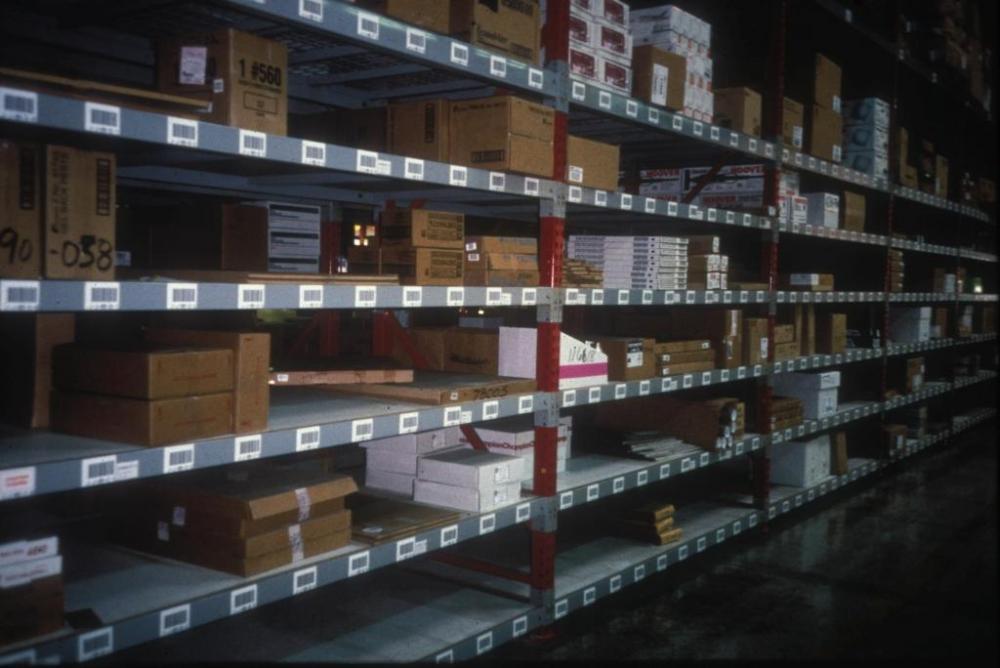
As mentioned earlier, a warehouse is a stocking place of a wide range of goods in racks. Hence, categorizing goods with proper rack labels is crucial. You can follow the below-mentioned steps to complete the labeling process quickly.
Step by Step on How to Label Warehouse Racks
Identify the Rack Type: Warehouse racks are available in varied options. They can be manufactured in styles that you never imagined before. With such diverse styles available, it is not a good idea to blindly choose a standard label to fit the purpose. One size fits all never works when it comes to warehouse racks. For example, depending on the product storage demands, the racks can be lengthy that stretch from one side or long arms protruding from a metal framework. Hence, you must identify the rack type first and then proceed with selecting the labels.
Involve Your Label Manufacturer Right from the Beginning: Most of warehouse managers commit the mistake of involving the label manufacturer half the way. This is not a good practice. Involve them right from the planning stage. Invite them to your facility or send them clear images of your facility and explain to them the layout and structure of the racks. Allow them to walk through the warehouse and see the rack arrangement. This helps the manufacturer to have a clear idea of the warehouse racks labels’ application area. This, in turn, allows them to produce the most suitable types of labels right for the facility.
Get the Right Label as per the Application: Get the label considering the surfaces to which they are applied to. If the demand is for a warehouse rack label that can be easily removed and replaced to another surface, then go for choosing a magnetic label. On the other hand, if the racks are subjected to constant foot and forklift traffic, then choose the ones that are durable enough to stand up to wear and tear. Speak to the manufacturer and get an idea of the labeling options available. You may also understand the customization possibility so that you can get unique labels that rightly fit the application area.
Labeling warehouse racks with crucial information is extremely important for enhancing product visibility, ensuring safety, boosting productivity, and augmenting inventory management, among others. Racks that are unlabeled would be extremely difficult to locate, which in turn delays the inventory movement.
Some Innovative Warehouse Rack Labelling Ideas
When it comes to increasing warehouse productivity, how you name your racks can make a big difference. Innovative warehouse rack labeling concepts improve organization while also streamlining inventory management, allowing workers to swiftly locate and handle commodities. Here are some innovative and effective labeling solutions to consider:
1. Color-Coded Labels
Color-coding is a simple yet powerful method to visually categorize different types of products or storage zones within the warehouse. For instance, you can assign different colors to each product category—such as red for hazardous materials, blue for electronics, and green for perishable goods. This visual cue helps workers quickly identify and locate items, reducing the time spent searching for specific products.
2. Magnetic Labels
Magnetic labels offer flexibility in dynamic warehouse environments where inventory and rack configurations frequently change. Unlike adhesive labels, magnetic labels can be easily removed and repositioned without leaving residue. This makes them ideal for racks that are often reconfigured or for temporary storage areas where labeling needs might change over time.
3. QR Code Labels
Incorporating technology into your warehouse rack labeling ideas can greatly enhance efficiency. QR code labels allow workers to scan the code using a smartphone or handheld device, instantly accessing detailed information about the item, such as its description, quantity, and storage location. This not only speeds up the inventory tracking process but also reduces the likelihood of human error in manual record-keeping.
4. Sequential Numbering System
A well-organized sequential numbering system is crucial for maintaining order in a large warehouse. Start by labeling racks from the bottom up, with the lowest level assigned as “01,” and continue numbering upward. This method ensures that when additional rows or racks are added, they can easily be integrated into the existing system without disrupting the overall flow.
5. Durable Materials
Warehouse environments can be harsh, with labels exposed to dust, moisture, and constant movement. Therefore, choosing durable materials for your labels is essential. Heavy-duty, laminated labels or labels made from materials resistant to wear and tear ensure longevity and maintain legibility over time. This is particularly important for racks located in high-traffic areas where labels might be subject to frequent handling or environmental stress.
6. Reflective Labels
For warehouses that operate around the clock or in low-light conditions, reflective labels can be a game-changer. These labels are designed to reflect light, making them highly visible even in dimly lit areas. This not only improves the speed and accuracy of locating items but also enhances safety by reducing the likelihood of errors during nighttime operations.
7. Custom-Printed Labels
Customization is key when it comes to labeling in a warehouse. Custom-printed labels that include specific information such as SKU numbers, product descriptions, and handling instructions can significantly reduce errors and increase efficiency. You can work with your label manufacturer to design labels that fit your exact needs, ensuring that all relevant information is clearly displayed and easily readable.
Warehouse Racks Labeling: More Steps to Follow
Although the steps listed above along with the ones listed below might look simple, they largely contribute to the proper labeling of warehouse racks in less time. Overlooking these steps leads to unnecessary confusion and delays.
Ensure that the Racks are ready to Label: Sticking labels on a dusty surface is not advisable as it creates performance and durability issues. Hence, prior to labeling the rack, ensure to clean the surface in order to enhance the label’s adhesive value. Also, ensure that the information printed on the label goes in hand with the stored items. If labeling goes wrong, it will confuse the forklift operators or those who are manually moving the goods. This in turn leads to unnecessary delays in material movement.
Label from Bottom to Up: It is always a good practice to stick the warehouse racks label from bottom to up. The bottom row must carry serial no 01, and when moving upwards it must be 02, 03, 04, and so on. This practice of numbering is beneficial when there are any future upgrades by adding rows to increase the height of the racks.
Final Check: Since manual labor is involved in sticking labels to the rows of your huge racks, there might be chances to commit mistakes. Sticking the label upside down, placing a wrong label, or inappropriate application are among a few commonly occurring mistakes during the application. Hence it is always a good idea to keep a supervisor who checks the correctness of the label with respect to each row of the rack as and when they are applied. This certainly ensures the right application without any room for mistakes.
Few other points to consider while labeling warehouse racks include:
Ensure that the writing on the labels is large enough for easy visibility.
Choose bright colors like yellow, red, or black while printing information. This helps in easy readability even from long distances.
Keep the information as simple as possible to read and understand even by low-level workers. Complicated jargons would confuse workers.
Warehouse racks label thus immensely contributes to pick the right materials from several rows of huge racks easily and quickly. As mentioned earlier, the racks which are properly labeled not only streamline the warehouse operation but also maximize the workers’ productivity. Planning to set up a warehouse with several racks in it? Then, get the durable racking solution from manufacturers like SPS Ideal Solutions and label them most efficaciously to recognize hundreds or thousands of stored goods without spending much time.
Frequently Asked Questions
What is the Importance of Warehouse Rack Labeling?
Warehouse rack labeling is critical for organizing and managing inventory effectively. Proper labeling ensures that products are easily recognized, resulting in increased productivity, faster inventory movement, and fewer errors while picking and arranging items. Workers in a well-labeled warehouse may easily locate commodities, increasing overall operational efficiency.
How Does Proper Labeling in a Warehouse Improve Safety?
Labeling at a warehouse is crucial to guaranteeing safety. Clear and visible labels allow workers to rapidly identify the contents of racks, lowering the likelihood of accidents or errors. Labels that carry hazard warnings or handling instructions help to create a safer working environment by instructing employees on how to handle items properly.
What Steps Should Be Taken for Effective Warehouse Rack Labeling?
To achieve effective warehouse rack labeling, follow these steps:
Identify the type of rack and choose the appropriate label.
Involve the label manufacturer early to customize the labels to your warehouse’s needs.
Clean the racks before applying labels to ensure adhesion.
Label from the bottom to the top of the rack for easy future expansion.
Conduct a final check to ensure all labels are correctly applied and easily readable.
Why Should Labeling in a Warehouse be Simple and Clear?
Labeling in warehouses should be straightforward and obvious so that even entry-level employees can easily grasp the information. This avoids misunderstanding and speeds up tasks such as picking and refilling. Using bright colors and huge fonts improves the visibility and efficacy of the labels.
What is Metal Sheet Fabrication Process and How Metal Sheet Processing Work??
Metal sheet processing is used in industries that rely heavily on sheet metal parts or equipment, such as storage container manufacture. Storage containers are made from a variety of sheet metals, including aluminum, steel, and iron. Many ways are used to mold these metals into storage racks, and this section concentrates on the fabrication procedures involved in producing storage containers.
Fabricating Sheet Metal
Various metal sheets are fabricated and then assembled together to be welded. Here are the steps in the sheet metal fabrication process
Drawing: Before you convert any sheet metal into a desired shape, a proper drawing or design is essential. The objective needs to be clear. So, the first step is drawing for fabricating sheet metal. This can be done in software such as CAD. This is a great tool for experts or engineers to fix any flaws or make additions or deletions at this level.
Planning the Process: The processes used for fabrication need to be listed in advance. The following are a few common processes employed for forming sheet metal.
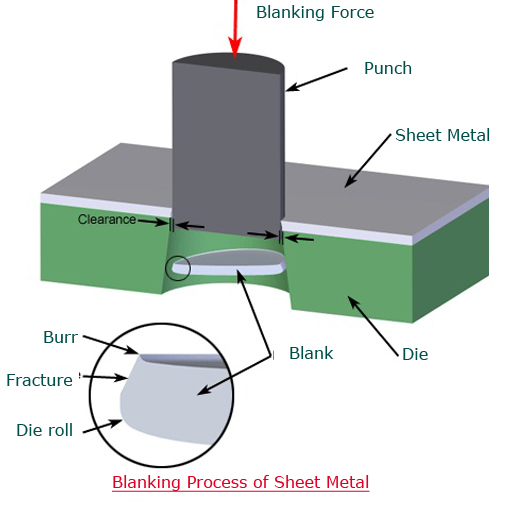
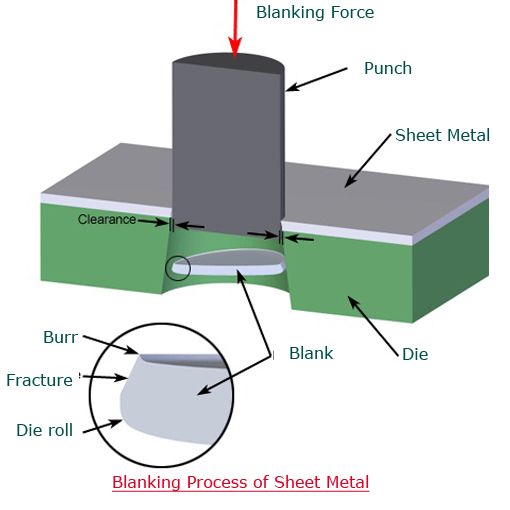
Blanking: This is primarily a shearing process, wherein the original metal sheet is punched and the workpiece is removed from it. This newly formed workpiece is called blank. This is done using a press, laser, or NC machining.
Riveting: This is basically a forging process. Two parts are joined together through a metal rivet which is also a metal part. So, this is a secure and permanent mechanical fusion of two straight metal parts. A rivet more or less resembles a screw with a cylindrical stem and a dome-shaped head.
Bending: This strengthens the sheet metal and helps remove sharp edges. This is mostly done on thin metal sheets.
Cutting: Cutting of the metals is carried out using various methods such as manual cutting, flame, laser, CNC lathe, water jet, and so on. Cutting using a lathe or laser gives precision and hence these methods are preferred. Manual cutting is not always recommended since it may lack the required precision. Also, cutting complex and very small shapes is difficult in this case. Water jet cutting is an environmentally friendly cutting method because it uses a jet of water to cut metals in the desired shape, and also it produces no burred edges.
Forming: This process is about giving the required shape to the metal after it is cut, or forming it into a certain shape. Metals could be shaped by rolling, bending, or stamping.
Welding: Welding is done to fuse the parts wherever required. Heating melts or softens the assembled parts, after which they are allowed to cool to facilitate fusion. It is mostly done on a low oxy-acetylene flame, although nowadays there are many more options available such as laser. MIG and TIG welding are the two popular types of welding employed at metal fabrication workshops.
Surface Treatment: This is done to form a protective coat on the metal. Also, such coatings help the paint adhere to the metal. Different types of films are used for surface treatment depending on the type of metal and client specifications if any. Some of these include powder coating, phosphate film, chromate film, oxidation, electroplated zinc, and baking paint. This improves the container’s operational life, resistance, and aesthetics.
In addition to the above-mentioned, other processes could be performed over certain metal sheets. These include burning, stretching, or any other depending upon the requirements. Most of these are done with the help of CNC machines or nowadays laser.
Advantages of Fabricating Sheet Metal
Versatility: Sheet metal fabrication has significant adaptability, allowing producers to build a wide range of forms and sizes for a variety of purposes. Sheet metal can be customized to fit a variety of applications, including automotive, aerospace, construction, and electronics.
Strength and Durability: Sheet metal components are widely recognized for their strength and durability. Manufacturers may create durable parts that can survive heavy loads, high temperatures, and harsh environment conditions by using the proper materials and production procedures.
Cost-Effectiveness: Sheet metal fabrication processes are usually cost-effective, particularly in mass production. One of the most critical factors influencing this cost-effectiveness is efficient material utilization. Sheet metal fabrication employs precision cutting and forming techniques to minimize material waste while improving raw material productivity.
Customization: One of the primary advantages of sheet metal fabrication is its ability to be customized to exact design specifications. Sheet metal components can be made to the exact dimensions, shapes, and specifications needed for a specific application. This alteration ensures that components integrate seamlessly into the finished product, hence boosting performance and functionality.
Efficiency: With technical advancements and automation, sheet metal production processes have become more efficient. Computer-controlled machinery and robotics enable high-speed production, resulting in quicker turnaround times and shorter project lead times.
Design Flexibility: Sheet metal manufacturing offers remarkable design flexibility, allowing engineers and designers to try out new ideas and innovative solutions. Sheet metal may be shaped and manipulated to produce complex shapes, intricate patterns, and smooth transitions between components, allowing practically any design concept to be achieved.
FAQs about Fabricating Sheet Metal
What are Advanced Custom Metals?
Advanced Custom Metals is the application of cutting-edge technologies and new approaches in sheet metal manufacturing processes. Unlike traditional processes that rely on manual labor and conventional machinery, modern custom metals use automation, robotics, and computer-aided design (CAD) to improve precision, efficiency, and customisation capabilities.
How to Fabricate Metal Using Sheet Metal Fabrication Techniques?
Sheet metal manufacturing procedures include cutting, bending, shaping, welding, and finishing. First, the required design or pattern is generated using CAD software. The sheet metal is then cut into the desired shape and size using procedures such as shearing, laser cutting, or punching. The metal is subsequently shaped or bent into the required shape by press brakes or rollers.
What Are the Benefits of Advanced Custom Metals in Fabricating Sheet Metal?
Advanced bespoke metals have various benefits over typical sheet metal fabrication technologies. This includes:
Enhanced Precision: Advanced technologies allow for exact control over fabrication processes, resulting in extremely accurate and consistent components.
Increased Efficiency: Automation and robotics optimize production procedures, lowering lead times and increasing overall efficiency.
Greater Customization: Advanced bespoke metals provide detailed shapes and complicated geometries that are not possible with existing processes.
Improved Quality: Advanced custom metals enable improved quality and reliability in produced components by reducing human error while increasing repeatability.
How Can I Ensure Quality and Reliability in Sheet Metal Fabrication Projects?
To assure quality and dependability in sheet metal manufacturing projects, examine the following factors:
Select high-quality materials appropriate for the intended purpose and environment.
Collaborate with respected fabricators who have the expertise, experience, and equipment to produce precision-engineered components.
Enforce quality control methods during fabrication, including inspections, testing, and documentation.
Ensure compliance with industry standards, laws, and client specifications for optimal performance and safety.
If you require customized metal storage units such as racks and pallets for your manufacturing facility, warehouse, or shipping, consult a professional and reputed supplier of the same. SPS Ideal Solutions is one of the leading providers of high-quality metal-based storage units, shipping, and material handling solutions. Additionally, they have specialized manufacturing centers where custom metal fabrications are done. They use technologically advanced methods and have the ability to handle complicated requirements.
What are the Factors to be Considerd While Calculating Warehouse Space?
Optimal utilization of space is necessary, especially in warehouses where items need to be stacked upon each other. Here are the steps to calculate warehouse space:
Find out the total area in square feet and subtract the area required for office space, canteen, rest rooms, and the likes. This will give you the exact area available for your warehouse.
List the types of items or materials you would have to store. This will vary with each industry.
Apart from the length and breadth, you need to consider the height up to the ceiling.
Consider the number of pillars, areas around ducts and corners. Simply calculating the area would not give you all these details.
Based on the size, weight, and the quantity of material, consider the orientation of the selves, whether horizontal or vertical, and their required height.
Similarly, consider the position of fans, AC units, and lights, especially hanging lamps if any.
Consider a separate area for warehouse equipment such as forklifts and ladders to be kept safely when not in use.
After calculating all these aspects, you can start planning on the placement of racks and pallets, as well as the manner in which the inventory needs to be stocked.
When planning, ensure that you have enough space to move through the aisles.
Make sure some portion of the racks is kept empty in case you need to fill them up owing to urgent orders.
Consider the legal aspects regarding the size, weight, and quantity of storage, as well as the safety aspects. You also need to consider the free space to be left on the floor, as well as the ceiling. You can get this information from the state regulatory body.
Keep some scope for rearrangement or restructuring in the warehouse.
When planning for storage, do consider entry and exit points including emergency exits, space for water sprays, fire extinguishers, smoke alarms, and so on.
Take advantage of mathematical calculations. Design software such as CAD and algorithms do help. However, a visual inspection of the area with all the details matters the most.
Do consider these calculations when you compare the area available on a shelf with the size of the container or equipment to be placed on it. After all, they do give exact measurements.
What are the Benefits of Calculating Warehouse Storage Space?
Irrespective of the space available in your warehouse, calculating warehouse space has many advantages. Here are some of them:
A well-planned storage unit helps boost production and prevent delays that occur due to not finding the required item on time.
Once all the safety features are in place, the probability of damage to items as well as humans reduces.
You know the items that are in demand or needed frequently, so that they can be stored in the front.
With a good tracking system in place, you know the shelf life and quantity of each item, and can remove the ones not required.
For certain items, you would require sturdy metal racks. With a proper planning, you can forego the wooden shelves or keep them for lighter items. There are good-quality coil racks and metal pallets available which can be customized based on your requirement.
If you want to optimally utilize the available area, it is recommended that you consult a professional storage solutions provider to calculate storage space. SPS Ideal Solutions is one of the well-known providers of storage, shipping and material handling solutions. Experts at the company have been helping clients to make the best use of their warehouse storage spaces by offering them customized storage solutions.
Before understanding the unique benefits of powder coating, it is important to know how powder coating is performed, and how it works. Liquid paints feature color pigments that are suspended in a solvent base, which is sprayed on metal surfaces. However, powder coating is performed in a dry environment through the electrostatic spray deposition (ESD) process. In this process, a dry powder is actuated with a positive electric charge, and is sprayed on the fabricated metal part at some pressure. Most times, dry powder bases of polyurethane, acrylic, polyester, or epoxy blends are considered for the purpose. The fabricated metal is usually grounded with an opposite negative charge. This technique works on the principle of opposites attract, and electric polarization is initiated, during which dry powder molecules attach to the metal part, thereby coating it. The electric polarization also assures a uniform coating of the paint on these containers. Unlike liquid coating, there are no complexities or challenges involved in this process.
Benefits of Powder Coated Storage Containers
As discussed earlier, storage containers are made using different types of materials such as carbon steel, stainless steel, and aluminum. Powder coating is perfect for all these metal types, and deliver many other benefits, too. These benefits are as discussed below:
Environment Friendly: How can dry paint be environment-friendly? This might be an obvious question for anyone. The dry powder coatings applied to containers produce no volatile organic compounds (VOCs), which make them environment friendly. Hence, the powder coating process produces less hazardous waste than solvent-based coatings. Also, unlike other solvent-based coating techniques, powder coating requires no oven for curing or finishing.
Durability: Storage containers are used in a variety of environments from warehouses to temperature-controlled storehouses. At all these places, they are subjected to different thermal conditions, chemicals, radiations, physical collision, and so on. All these may have a damaging effect on storage containers in terms of their durability and aesthetic appeal. This is where powder coating may help. It lends a durable and hard finish to metal surfaces, and helps them withstand adverse conditions with ease. A powder coated container part is resistant to scratching, chipping, and fading.
Appearance: Like any other metal product, aesthetic appeal is an important aspect of industrial storage containers, too. Uniform coating of paint on these containers improve their reflection under light, which improves their aesthetics, visibility, and creates a unique feeling in the minds of a forklift driver or a product handler. Nowadays, warehouse managers are adopting various types of powder coating designs including semi-gloss, high gloss, and matte finishes to improve aesthetics of containers. Sometimes, glitter and metal flakes are also added to dry paint to improve their visual appeal. In addition to all these, a wide range of specialty effects can be achieved on the container in comparison to other painting processes. Powder coated racks retain their gloss and charm for a long time.
Uniformity: Powder coated containers have smooth, yet uniform appearance throughout the body. The application of solvent-based paints brings challenges in the form of imperfections such as dust bumps, insects, bubbles, and so on. All these can be easily eliminated in powder coating, which assures imperfections-free appearance.
Corrosion Resistance: Most metal containers are susceptible to rusting because they are used in moisture-laden environments. They may be subjected to rain, sleet, snow, hail, as well as water exposure and humidity. Powder coating ensures uniformity throughout the body of the container, so there are no open pores through which moisture can seep in. This helps improve corrosion resistance of the container.
Color Matching: Powder coated racks can be availed in custom colors. Dry pigments are available in various colors, and they can be easily matched with brand colors. This color matching helps improve the brand recognition, and lends aesthetic appeal to the rack. Businesses can make bold color statements by utilizing powder coated racks and containers.
To realize the benefits of powder coating, it is important that you source these powder coated racks from a trusted manufacturer like SPS Ideal Solutions. The company provides powder coated racks in custom sizes as per your requirement.
With the help of the following simple tips, you can easily prevent pallet rack damage.
Select Appropriate Racks: The pallet racks are available in various configurations and designs such as drive-through racks, push back, and flow racks. You need to choose an appropriate racking system as per your requirement. An accurate understanding of various rack system designs and your load requirements will help to meet industry safety standards. Selection of pallet racks depends on various factors such as a number of units to store on the rack, installation area, and material handling method. In addition to this, you need to consider the fastest turnaround time of the product or how frequently you need to take it off the shelf brackets.
Provide Proper Space: Space planning is one key aspect of safe racking system. Your distribution center provides space for workers to maneuver heavy equipment or heavy load units from one to another space. However, that is not enough, you need to place these pallet racks such that they are at safe distance from each other. Also, you need to train your worker on how to keep corridor ways or aisle free of unnecessary units.
Ensure the Aisles Have Proper Width: At many workplaces, material handling equipment such as forklifts, trolleys, and trucks are used on a regular basis for moving materials. Cluttered aisles can be a big problem in such situations, as they may increase the possibilities of accidents. It is important to ensure that the aisles possess ample width to ensure maneuverability of these devices.
Use Safety Guards: When it comes to storage rack safety, then this aspect plays an important role. Pallet rack guard panels are helpful in protecting workers, as well as your inventory. Installing safety guard is one economical way to avoid dangerous and costly damage. Once safety guards are installed, don’t forget to train or guide your worker on how to use them in an emergency.
Ensure Adequate Lighting: Warehouses or other storage areas should be equipped with proper lighting solutions. They not only make the warehouse safer but also help in reducing the number of accidents. Additionally, appropriate lighting helps raise and maintain the concentration of workers, which results in a huge positive impact on their productivity. Adequate lighting in the warehouse is also important for forklift operators. These lighting solutions allow them to safely drive through the walkways. With these lighting solutions, the drive can easily observe their surroundings and at the same time avoid unnecessary mishaps.
Conduct Regular Inspections for Damage: The pallet racks bear lots of wear and tear, not just forklift damage. The various causes of pallet rack damage include improper loading, faulty equipment or some error, the weight of the items being stored and so on. Thus, it is very important to inspect your rack and attached safety guard panel on a regular basis. Also, repair them as needed. The frequent inspection helps identify the potential damage before it becomes a major issue. A few things to be taken care of are loose hooks and bolts, corrosion or rust on mounts and posts, loose mounting holes, damaged beams, and so on. If you repair as soon as the issue is noticed then it may be easy, however, if the components are structurally damaged beyond the repair then replacement is the only option.
Set Speed Limits for Maneuverable Equipment: Forklift instabilities is one of the common causes of accidents in workplaces. There are chances that forklifts may overturn when the driver applies brakes suddenly. Due to this, it becomes important to set speed limits while operating the forklifts. The maximum speed for forklifts may vary based on various environmental conditions such as the flow of pedestrians, poorly lit areas, and so on.
Devise an Appropriate Usage and Training Program: Workers’ training should always be a priority for the warehouse owner. This is one of the easy ways to prevent pallet rack damage. During the training program, train them on how to safely load, balance, and remove the units from the storage racks. By offering a helpful training program, workers will perform the task with ease. Workers should also receive training in the racking system maintenance, as well as operational limits of the forklift used.
All the outlined tips play an important role in the prevention of pallet racks damage. Also, these tips should help lengthen the lifespan of your storage racks. Still, you have concerned about pallet racks safety hazards? Feel free to contact SPS Ideal Solution. The company is one of the leading suppliers of industrial storage racks. The experts at the company will also assist you in the right selection of pallet racks.
Here are some common uses of portable storage containers:
Office Remodeling: Businesses may require renovation for several reasons, ranging from periodic cleaning to utilization of the existing space and more. However, based on the business nature, it can be risky to expose confidential information or documents to the influx of workers and contractors visiting the office. With portable storage containers, your businesses can store important documents as well as equipment in a safe place away from the office undergoing renovation. These containers offer plenty of space for all types of office equipment including proprietary products or fragile equipment so that there is no risk of exposure to the public. Thus, you can be rest assured by knowing your things will stay dry and safe inside.
Home Renovations: Other than office remodeling, portable storage containers are also useful for renovating your house. Whether you’re remodeling a single room or kitchen or doing some additions to your home, portable storage containers can offer all the storage needs. Portable storage containers are perfect for storing large furniture that needs to be moved out during renovation. Portable containers offer secure and safe storage for all your belongings, and you still can easily access your things.
Seasonal Storage: Decorating home for the holidays is an amazing experience, and is a stress buster in itself. However, managing all those decorative items is not easy during the year. A portable storage container can offer you a great solution to this problem, enabling you to securely store and access festive decor when they are not needed. Also, you can bring them out again once holidays are around again. In addition to festive decor, portable storage containers can also be used for storing seasonal sporting equipment including boating equipment, motorcycles and more. So, this way all the unused equipment won’t occupy extra space in your house. However, the stored equipment should not contain fuel or anything inside a storage container, and this point should be carefully noted.
Event Storage: This is another application area of a portable storage container. Recreational events such as fundraisers and fun-runs present a logistical challenge. Also, many equipment and materials are required during these events. If you are dealing with spacing issues to store it all, then the portable storage container is a great choice. These containers offer plenty of extra space for storing all the equipment and supplies that will make a successful event.
Moving Equipment: Moving heavy equipment from one to another place can be a stressful and time-consuming task. However, it can be made easier with portable storage containers. These storage containers are designed such that they can hold pieces of equipment or complete equipment. However, many manufacturers and suppliers also rent a moving truck to deliver various equipment in nearby destinations. Dealing with these containers are more convenient and less stressful than renting a moving truck, as they help minimize damages caused during transportation. Nowadays, many manufacturers use sturdy and reliable portable containers to ship heavy equipment to different countries.
On-site Equipment Storage: Like commercial, home, and event storage, portable storage containers are used to store the on-site equipment. For instance, many construction companies and landscapers require a safe place where they can store their tools and equipment. Also, moving this equipment from one job site to another takes a great deal of time. This problem can be avoided using portable storage containers. They offer a practical solution to store more valuable equipment, which is too large to store in movable trucks.
Portable storage containers are ideal for storing all your warehouse or industry items, which you may not need to access all the time. Along with offering an efficient space-saving solution, these storage containers are versatile and durable than ordinary ones. Isn’t it interesting? Are you looking for a manufacturer who can offer you portable storage containers at competitive prices? If yes, then SPS Ideal Solution is the right choice for you. The company offers these storage containers in various sizes to fit the need of clients. Contact us to know more about our products.
Understanding the Different Components of Industrial Storage Racks
The understanding of repair vs replacement is incomplete unless you have an in-depth understanding of different rack components. These components will fail to perform if they are damaged.
Horizontal Beams: These support the load pallets, and their bending or deflection may lead to a catastrophic failure.
Vertical Uprights: Along with horizontal beams, vertical uprights are one of the important components of the racking system. These components support the entire weight of the rack. Vertical uprights may fail due to buckling.
Diagonal Braces: These braces are used for supporting horizontal beams and vertical uprights. In short, these braces help keep the racks square and strong. Many times, these diagonal braces may fail due to stress.
Baseplates: These are the metal tabs positioned at the bottom of the column posts. Baseplates are provided with pre-drilled holes for anchor bolts, which help secure them to the floor. These baseplates are subjected to compression forces, and they may fall due to improper anchoring. This causes the floor base of the rack to topple or fail.
Frame Connectors: As the name suggests, these are designed to join together different components. Designed for bearing heavy loads, these connectors may get weaker with time, thereby causing heavy damages.
Analyzing the Important Causes of Storage Rack Damage
The storage racks may damage due to several reasons such as:
Overloading
Forklift damage
Operational changes that are incompatible with the existing design
Visual inspection is one of the best methods for identifying the damaged components. Although most damages can be easily identified, sometimes they are difficult to spot. Some damage signs may be ignored as insignificant, when in fact they may lead to catastrophic failure. Here are some tips to identify the damage in racks:
Conduct a primary inspection every day to check, if the rack appears normal. If no, then how do they look—plumb, twisted, or skewed? Are the alignments proper? Do they appear misaligned or crooked? All these are indicators that there might be issues with horizontal beams, vertical uprights, and diagonal braces.
Next, look for buckled or bent vertical uprights. These may not be easily visible to naked eyes, so use a three-foot level, and position it against the upright. If you notice a gap then there is a problem. Any slight bend or gaps may affect the ability of the stand to bear heavy loads.
Similarly, you also need to check for beam deflection, because they may appear saggy or bowed. These signs indicate a serious problem. So, you can relieve the loads and take the necessary measures to replace or repair the member.
Misaligned braces, loose baseplates, and connectors, and rust plates are a few other symptoms that you need to take seriously.
While attending to these problems, do not forget to analyze the reasons why these have occurred. This analysis will definitely help you avoid serious injuries and accidents, and repetition of the same issues in the future. What are the common causes of warehouse rack failure? After knowing these causes, comes the next step— whether the part requires repair or an entire replacement. The same will be discussed in detail in the next post. Stay tuned to know more.
Warehouse storage racks are one of the important assets for any manufacturing business. Small damage or failure of these racks may lead to severe losses. There are several reasons why these racks may fail. They are discussed in this post, along with the scenarios when either repairs or replacements may deem appropriate.
Why Repairs are Beneficial than Replacements at Certain Times
Like any other business decision, it is important to check the pros and cons of repairing and replacing warehouse racks. The following are some benefits of repairing warehouse racks:
Quick Solution: If the damages are minor, then repairing becomes a quick solution as you don’t have to wait for new replacement parts.
Smooth Warehouse Operations: Most times, repairs are conducted during non-business hours, but if conducted in business hours, they rarely disrupt the operations.
Repairs are Affordable: Although plastic racks are gaining popularity across warehouses, there is a high demand for metal racks. These racks are designed for long-term use; however, they may require minor repairs sometimes. Most times, these repairs can be easily done, and they remain within budget, too.
Fewer Loading and Unloading of Parts than Required for Replacement: Rack repairs may involve the replacement of certain parts, but fewer parts would need to loaded or unloaded compare to that in replacement.
Save Money on Pallet Repair Kits: If you have already invested in pallet repair kits, they can be used for repairing minor damages. So, you can easily save money on repair kits.
Why Storage Rack Replacements are better than Repairs in Some Situations
Storage rack replacements become a practical option at certain times. The following are a few cases when they become unavoidable:
The rack is damaged beyond the point of repair. They cannot bear the extensive load and may collapse anytime, thereby endangering the lives of people around as well as the stocked inventory.
The rack system design has become obsolete, and its parts are not available in the market.
Repairs may be difficult owing to the expenses involved or the lack of experienced repair professionals. Some complex repairs are difficult to handle, and they can only be performed by experienced players.
The facility is being relocated to the new place, and moving the racks that have moderate damages may not be worthwhile.
Thus, the choice of repair vs replacement of warehouse storage racks will entirely depend on the severity of the damage, and other factors. Whenever investing in the new or used racks, it is important that you source them from a customer-driven manufacturer who offers quality customized storage solutions. SPS Ideal Solutions has been one of the leading providers of warehouse storage systems, since its inception.
Things to Keep in Mind When Purchasing Portable Containers
Here are a few important factors to be kept in mind while investing in portable storage containers.
Renting or Buying Containers: It is one of the most important considerations to be made, whether you want to rent or buy a container. Renting is the easiest and the most affordable way of owning a durable container. Today, you can find several rental companies that will provide you the containers in desired sizes to meet your requirements. Also, the cost of rentals is almost a fraction of the complete sale price. However, if you are buying a storage container for permanent use, several conditions will matter. They are discussed ahead in detail:
Application or Purpose of Using the Container: Most times, portable storage containers are used for shipping. However, they are also used as temporary housing after a disaster, seasonal storage for retail inventory, storage space for documents and records, construction equipment, farm equipment, and many more. Many times, people also repurpose these containers because they are made of environment-friendly material.
Delivery Space: Nowadays, portable storage containers are available in various standard and custom sizes, still it is important to consider the delivery space before placing the order. As a general rule, the delivery space must be two times the length of the container plus an additional 10 feet. This additional length will allow delivering the container efficiently on a trailer or bed “roll off” style truck bed. Adequate width and clearance space is a necessity when considering a portable storage container. There is a misconception that you can buy the container of the same size as your storage space.
Location: Although made of high-quality steel material to withstand harsh environments, it is important to consider the location where the container will be placed. If this consideration is not made, then you may not be able to utilize it properly. Also, if the location is not properly leveled, you can use wooden blocks during storage. If the storage container is to be used outdoors then ensure there is adequate drainage facility, otherwise the container may sink during flood-like situations.
Types of Security Doors: Most shipping and storage containers are made using 14 or 12 gauge corrugated steel sheets. Their frames are made of 6–8 gauge steel, and have 1″ treated hardwood floors. These containers are equipped with cargo doors, or roll-up doors. Cargo doors provide excellent protection from rodents and other environmental elements and are seal tight. The roll-up doors are not 100% water tight, but they are lightweight and easy to maintain.
Types of Storage Containers: There are several types of portable storage containers; however, some of the common types include:
Standard Containers: Most of these containers are 8 feet tall and available in 40-foot, 45-foot, and 20-foot lengths. These containers are easily available, and offer the best value for investment.
High Cube Containers: These containers are much alike the standard containers, with the only difference that they are almost a foot taller than the standard ones.
5 Things to Look For When Choosing a Portable Storage Container Supplier
Now you know what to look for in portable storage container, irrespective of whether you are planning to own it or lease it. Owing to their increasing uses, you can easily find many manufacturers and suppliers of these containers. However, not all of them are trustworthy, and some may even lack the experience to build containers that serve your purpose. It is important that you consider the following factors while making a buying decision.
Reliability and Years of Experience: The industry trends are changing. It is important that you check if the manufacturer has any valid experience designing a container for business or application of your type. Before contacting the manufacturer, you can conduct brief research on their business and experience by visiting their website or reading reviews on various websites. Nowadays, most manufacturers are active on various social media platforms, and you can easily check their posts to see the images, and people’s reviews on their products.
Check their Industry Knowledge: This portable storage container buyer guide discusses various things that a manufacturer or supplier must know. In addition to that, you have a better understanding of your requirements. Combining both, you can talk to the prospective manufacturer or supplier to see how they can meet your requirements, or how much they are eager to serve you. After knowing your requirements, they should offer you solutions for your problems. In most cases, manufacturers may suggest the standard solutions, however, it is better if they are able to offer you a requirement-specific solution.
Check if They Have a US-Based Manufacturing Unit: This consideration becomes important, many manufacturers don’t have their own manufacturing units in the US. They outsource the manufacturing tasks to China-based manufacturers. Although they claim to provide quality products in adherence to industry standards, that may not be true. So, whoever, you decide to work with, ensure that they have US-based manufacturing facilities.
Analyze the Manufacturing Capabilities: Although you can see the manufacturing capabilities of the manufacturer on their websites, it is better if you meet them in person and ask the questions you have. You can ask them about the type of technologies they use for manufacturing as well as their capability to deliver storage containers in large or small volumes.
Check if They Provide Repairs: The stainless steel portable storage containers are made for long-term use, still they may need repairs after a few years. So, you need to check, if the manufacturer offers any type of repair services such as minor modifications, component replacements, and so on.
This portable storage containers buying guide includes all those important points that will help you make the right decision. It is important that you purchase these storage containers from a reputable manufacturer who offers a warranty and assures a good customer service. SPS Ideal Solutions is one of the leading manufacturers of portable storage and shipping containers. They regularly design containers for construction companies, fire and flood remediation services, disaster relief units, retail storages, military facilities, rental services, and more.
Stacking pallets properly not only save space at your shop but also helps eliminate tripping and collision hazards. It also helps to categorize the goods, which in turn eases the material storage and transportation activities. But if you stack pallets carelessly or overly high, it leads to collapse, causing injuries or death to those in their vicinity. The following are the measures majorly suggested by OSHA when it comes to stacking pallets.
Ensure that the pallets are durable enough to carry loads of any kind. Also, check the pallets for any damage before stacking the goods.
As per the OSHA pallet stacking regulations, do not stack products with sharp corners or edges in pallets in a manner such that they face main aisles and injure any person coming near them.
Securely tie the boxed items. You may use cross-ties or shrink plastic fiber for the purpose.
Ensure that the metal pallets are stored in a clean place and have no protruding nails, holes, splinters, or loose boards, among others.
Pallets must be positioned in a stable manner to avoid collapse or sliding when stacking goods on it.
Avoid keeping stacked pallets in high traffic areas.
Stack pallets up to 15 feet high, however, this will depend on the type of goods you stored on them.
Do not stack products only on one side of the pallet. The load must be evenly distributed.
If you are stacking different products, follow the practice of stacking similar items with uniform size and shape together and next to each other. Ensure to use appropriate pallets with the right capacity to stack goods.
If there is still room for stacking items than its rated capacity, do not try to overstack the pallets.
Always take care to stack the heaviest load at the bottom of the pallet.
Maintain sufficient clearance around stacks. This ensures safe handling and easy access.
Make sure to provide the workers with general ergonomics training and task-specific training to assure proper stacking.
Do not ever stack goods in such a manner that obstructs lighting, electrical panels, or ventilation, among others.
Climbing on the fully stacked pallets must be strictly avoided under any circumstances.
Use protective equipment like gloves, industrial shoes, and helmets while stacking materials. You will never know when unforeseen accidents happen and cause injury to you.
It is not advisable to stand on an empty pallet. The deck board can break or workers’ feet may get caught between deck boards.
It is not advisable to manually lift heavily stacked pallets as per OSHA regulations, instead use a forklift or automated pallet dispenser for lifting.
Benefits of Compliance with OSHA Pallet Stacking Regulations
Enhanced Worker Safety: Compliance with OSHA pallet stacking regulations prioritizes the safety of workers. By following proper stacking procedures, organizations can reduce the risk of accidents, such as pallet collapses, falling objects, or trips and falls.
Reduced Liability and Legal Risks: By complying with pallet stacking regulations, businesses can avoid penalties, fines and potential litigation related to workplace injuries or violations. Compliance helps mitigate legal risks, protecting the organization’s reputation and financial stability.
Enhanced Productivity: Compliance with pallet stacking regulations helps create a structured and safe working environment. When employees have clear guidelines on how to properly stack pallets, they can work efficiently without the need to correct or redo improper stacking. This saves time, minimizes disruptions, and allows employees to focus on other productive tasks, leading to increased overall productivity.
Positive Workplace Culture: Prioritizing compliance with OSHA regulations fosters a positive workplace culture centered on OSHA pallet safety and employee well-being. A positive workplace culture built on safety promotes teamwork, communication and a sense of collective responsibility.
Compliance with OSHA pallet stacking regulations not only protects employees from potential hazards but also benefits organizations by reducing risks, improving operational efficiency and fostering a positive work environment. It is essential for businesses to invest in OSHA pallet safety, procedures and equipment necessary to ensure compliance and create a safe and productive workplace.
OSHA has formulated several more safety practices for stacking pallets. Following such practices, although they seem basic and simple, helps prevent damage to life and property. You may also seek tips from the manufacturer from whom you are procuring the item regarding to the OSHA safety standards. Leading manufacturers like SPS Ideal Solutions will surely guide you on tips of OSHA regulations for stacking pallets.
Five Important Tips to Reduce Warehouse Costs and Increase Profit
If you are an OEM or supplier of parts and materials required in the manufacturing sector, you would require a warehouse to stock your inventory. However, maintaining it is easier said than done. If you stock excess parts you may be at loss if they are not required, and their operational life is over on the shelf. On the other hand, it is crucial that you are able to fill the demand and supply gap. That means you have to ensure the required parts are available to avoid production delays and further losses. Aside these, there are many other factors, which add up to the maintenance costs of a warehouse, and which can be easily avoided. Here are some factors which may help you plan your inventory in a better way, save costs and increase profits:
Optimal Storage and Space Utilization: Forming aisles in your warehouse helps a lot. Make sure you have enough space for the workers to walk around in the aisle and also for any equipment and items to be loaded or unloaded. The quantity and size of items you store should be directly proportional to the warehouse area. So, you need to prioritize the most used or required items and stock them first. Make sure the aisle arrangement facilitates easy navigation of an item directly from the shelf onto the truck. Another important factor is the quality of racks and storage units and their weight-bearing capacity. Do not overload the racks. They may cause damages and pose safety issues to the workers, adding to the warehouse costs. Also, maintain a standard order of storing items so that they are easy to locate, and procure.
Used Pallets, Containers, and Storage Racks: Whenever and wherever possible, buy good-quality but used pallets and containers. These may include trays, bins, wire baskets, and so on. This will save a lot on the total warehousing cost.
Investing in Technology: Automation to some extent has become essential for a number of reasons. Protecting your items from theft and damage is crucial. RFID tagging of all the items is an effective solution. Similarly, automating the lighting system in your warehouse can reduce your energy bills and subsequently the warehousing costs. Using occupancy sensors helps switch on the lights only when needed. Also, you can adjust the luminosity in certain areas of the warehouse where it happens to be dark. Invest in an online warehouse management system. All this will save on delays, energy bills, and labor costs.
Reorganizing Items Based on the Market Trends: For this, you need to know the sales pattern for the week or month. You can stock the items needed in the front. This offers two advantages — avoiding delays due to searching of items and periodical cleaning and reorganizing of the warehouse.
Cross Training Employees: Underpaying your employees is a totally bad idea, and allowing employees to sit idle is a burden as well. So, having a limited number of experienced employees and cross training them is a good option. They also get to learn the other functions of a warehouse. For instance, you can train the packaging workers on how to load and unload materials from the ship or truck or train them on effectively using certain equipment and forklifts. Additionally, training the employees on the technology incorporated at the warehouse is just as crucial.
Most industrial units require warehouses; however, the requirement and budget of each unit varies. After sorting out your requirements, your warehousing costs will decrease, and you will certainly have lots of scope for savings and profit. However, to store the inventory in the most organized way, you need good quality pallets and racks. Additionally, it is crucial that you get them from a recognized manufacturer using high-quality steel and other materials. SPS Ideal Solutions is one of the leading providers of shipping and material handling solutions.